Arrival raises many good questions. Not necessarily questions about how language works or what to do in the event of an alien invasion, but questions about the structure of narrative construction and what makes for a compelling story.
Arrival‘s surface structure is humanity’s encounter with intergalactic beings and its deep structure is a woman coming to terms with her fate. There are also ideas presented of how we would go about communicating with aliens, humans’ unwillingness to cooperate with each other, and the mysterious nature of Time. Any of the above –explored in-depth and with enough panache– can make for good cinema. In Arrivalhowever, these elements were not exploited in any sort of arresting way. Instead, they function here merely as pieces to a puzzle we are asked to solve.
To enlist the audience as puzzle-solvers, I’m guessing the filmmakers hoped we would exhibit the same fear, curiosity, and frustration that protagonist Louise (Amy Adams) felt when she was busy deciphering alien syntax. But instead of eliciting such complex emotions –all I felt was boredom. The way I see it, the filmmakers either could have either gone full geek and used a bunch of extra scenes to explain in detail how one would actually go about understanding an alien language or just entirely skip the process altogether to push forward the plot. Instead, they chose to compromise and we are subjected to watch Amy Adams go through the motions of learning an alien language without learning anything ourselves. (I have to applaud the choice of casting Jeremy Renner as Louise’s teaching assistant for his sheer presence brought much fresh air to an otherwise stuffy set.)
I found it hard to care deeply about any of the characters and I suspect this has to do with the puzzle-like construction of the plot. The thing about puzzle pieces is their individual significance derive entirely from their relations to each other. The upshot is you end up only caring about how the pieces fit together and not the pieces themselves. The thing that disappoints me most is that I wanted to like the characters and care for their outcome; I wantedto learn more about language and the nature of communication. However, the filmmakers overly concern with withholding key pieces (to keep the puzzle intact) superseded all other artistic considerations. The story thus becomes less about the characters (nor the ideas) and more about the filmmaker’s conceit.
One of my most prized possessions: My Mechanical Keyboard (Corsair K70).
There is a common misconception that minimalism is just about having less things than your friends (or just less stuff in general). This is partially the fault of minimalist bloggers’ mild obsession with counting their stuff and showing off how little they get by with. Thus you get blog post titles like ‘My 100 Thing Challenge‘, ‘All 55 Things I Own‘ and ‘Tour my Minimalist Apartment‘. These posts are meant to show personal examples of minimalism in action, but they may give the wrong impression if you aren’t already knee-deep in minimalist philosophy.
Minimalism is not a competition to see who can own the least amount of stuff. You don’t reduce the items in your life to an arbitrary number and (poof!) you are suddenly a “minimalist”. I am glad these same bloggers that show off their things (or lack thereof) always remember to take the extra step to clarify this:
“It’s important to understand that the reduction of physical possessions is often a RESULT of Minimalism, not Minimalism itself. Just giving away a bunch of things doesn’t make you a Minimalist, any more than buying a statue of Buddha makes you a Buddhist or doing yoga makes you healthy.” – Colin Wright, Minimalism Explained
“If you desire to live with fewer material possessions, or not own a car or a television, or travel all over the world, then minimalism can lend a hand. But that’s not the point.” – The Minimalists, What is Minimalism?
“…I’m not going to be a zealot here and try to convince you to throw away all of your possessions and go live on a mountain or something.” – Mark Manson, Minimalism
Minimalism is, above all, an attitude towards things.
Below, I will specify the facets of this attitude:
THINGS ARE TOOLS Minimalists mainly view things as tools for us to get something done. This is opposed to the view that things are collectible items. Things are bought to be used on a regular basis.
THINGS ARE NOT EVIL There is absolutely nothing wrong with material possessions. We all need to own a certain amount of things to live a healthy and happy life e,g., toothpaste. The evil lies in owning things that add no value to your life, or worse, subtract value from your life. Example is owning a car you never drive but still pay parking and insurance on it every month.
I GOT A FEELING The thrill that comes from purchasing something (however exhilarating) should never be the primary reason to buy something. Minimalists purchase something for the thrill of actually using that item in our day-to-day lives; where we acquired it and how we felt at the moment of purchase is totally irrelevant.
WTF PURCHASES!? Never buy something you do not need nor want. It will most likely never be used and you end up wasting money and space (to store your thing). The item could have gone to someone that actually needed it.
NOT A DEAL Never buy something if the only reason is the item is on sale or the price is cheap. See above.
BUY HIGH-QUALITY THINGS The ultimate value of a thing is judged by how much utility and/or pleasure we can personally derive from it over a long-period of time. My blender, of which I use every other day, brings me great utility (in achieving the goal of smoothie-making). Because minimalists try to maximize the use of their things, they prefer things made of high-quality materials to endure the test of time. Ample time is given to research the quality of a product prior to the time of actual purchase. Never hesitate to pay a bit more money for a superior product, it will most likely be worth it in the long run.
GOT A MATCH? Prior to a purchase, investigate deeply into whether you actually need it in your life. A thing can be made of the finest material and is the highest quality product of its kind. But none of that matters when you are personally never going to use it. Make sure the thing you are buying is going to fit into your life.
COLLECT EXPERIENCES RATHER THAN THINGS
Can you be a minimalist and also an avid collector of things? That is a really tough question. My friend (not a conscious minimalist) is of the collector type. He likes to buy things for the sake of having them. They come mainly in the form of toy figurines and various posters. As long as you are conscious of your purchases and your collection genuinely brings you pleasure,I see nothing wrong with collecting things. However, I recommend trying to collect positive (and potentially new) experiences rather than material things. By all anecdotal accounts of minimalists, they all swear that positive life experiences are by far more rewarding than the chase for more things. You can even document your experiences in a journal and this can form a type of collection.
BOOKS: IT’S COMPLICATED
Like many minimalists, I love reading books. I also enjoying buying lots of them cheaply and displaying them proudly on my shelf. I believe I can simultaneously express my intelligence and individuality through my fine selection of books (read: superiority-complex). They also act as my companions when I am without a friend. That being said, I personally don’t think anyone should be merely collecting and displaying their books, they should also read them from time to time. Too often the simple act of appreciation is displaced by the game of acquisition. I am reminded of the documentary on the famous philosopher Derrida when the interviewer asked if he have read all the books on his shelf (the size of an entire wall)? He answered: Maybe 4 of them. I am definitely trying my best to trim down my collection of physical books. I own an e-reader and also frequent the library. I came to realize that what I truly value is not really ownership, but the convenience of access. Oh, I need to look something up? It’s right here within arm’s reach. I think a good way to determine the value of a book is how often you find yourself needing to reference it. If you keep coming back to it, it’s probably a good idea to have your own copy. Otherwise, just get it from the library.
GO AND MAKE SOMETHING
It’s no secret, we are a generation of consumers. We buy things other people made, we eat things other people prepared, and we watch shows other people filmed. There is great joy to be found in buying things, consuming things, and owning things. What is not advertised is the joy found in creating things. You may not be the greatest artist, but you should seriously consider partaking in some form of creative endeavor. You may be surprised to find that the attempt to make something to be both rewarding and empowering. Perhaps you will even discover something you never knew about yourself.
In conclusion, minimalists are not “haters” of things nor think that having less stuff miraculously makes you a better person. But minimalists do believe that getting rid of unnecessary things is necessary for a better life.
For a more “formal” introduction to Minimalist living, see my original post here.
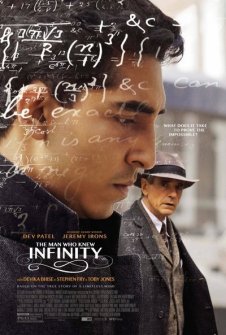
Srinivasa Ramanujan (played by the spirited Dav Patel) is a poverty-stricken young man from India who also happens to harbor one of the greatest mathematical minds of the 20th Century. He gets admitted into one of the most prestigious schools in England (Cambridge), makes some friends and enemies, and leaves behind a handful of publications. Early on into the movie, Ramanujan’s wife asks him, what’s the purpose of the math that he spends all his time on? We might ask the same question of this film. After all, the true-to-life-misunderstood-genius-struggling-to-gain-recognition biopic is a well-trodden path, what makes this one so special?
I must first began by acknowledging the exquisitely beautiful cinematography and acting done in this film. In terms of visuals, this movie is flawless. The scenes of Trinity campus at Cambridge is properly glorified and I appreciated the attention to detail paid to the decoration of Ramanujan’s boarding room (e.g., the little religious figurines on his desk and the post-it notes by his window). The dining hall reminds us of Hogwarts and we can’t help but drink in the magic in the air. Patel’s interpretation of Ramanujan as a character straddles between humility and arrogance thus giving a seemingly simple character a touch of complexity. Likewise, his tough-love mentor and partner-in-crime G. H. Hardy (Jeremy Irons) makes for a believable math professor who thinks he’s cleverer than he is.
Alas, impeccable visuals and charismatic performances in themselves do not guarantee a story well-told. Narratively speaking, The Man Who Knew Infinity leaves much to be desired. My biggest gripe is the movie attempts to be an epic but ends up feeling more like a short-story. The filmmakers bring to play several relationships, conflicts, and themes but fails to say anything new nor meaningful about them. Rather, they end up distracting us away from the more interesting aspects of Ramanujan’s life i.e., his mind and his unique contributions to the world of math.
Thinking about this movie, several relationships and conflicts come to mind. The most important relationships were Ramanujan’s relationship with his wife, his relationship with his mom, and his relationship with his mentor. Abstract relationships include his relationship with mathematics and his relationship to his God. All we really had to know was his wife loved him unconditionally; his mom contracted empty nest syndrome but ultimately is shown to be proud of his achievements; and his mentor and him disagreed on methods but they eventually become besties. There were no shortage of conflicts either. There was the main conflict between him and Hardy on what makes for publishable material in the math world, conflict between him and the people who shun him for his skin color, and conflict between him and other professors who see him as a threat to their superiority.
Although family-relations, racism, and workplace drama are important themes to explore, here in this particular story, they do little to advance the actual plot nor make the story more interesting. Maybe the point here is that all geniuses were products of their time and we must look at the historical circumstances in order to understand any genius. But the thing you have to know is this: Ramanujan as a character is interesting precisely because he tried to live a life that transcended his historical circumstances. Although his body absorbed much cultural shock when he landed in England, his mind remained relatively unscathed. His only real concern was whether or not he can get his work published. We get a tiny glimpse of Ramanujan’s inseparability from the beauty that his work provides him and it is Ramanujan obsessive relationship with this beauty that we find rare and fascinating. This relationship is the only one worth developing but we are left wanting.
When we meet Ramanujan, he was already a young man with a thick tome of self-made equations under his belt. We get it, he’s smart -but how did he get here? I read a bit into his history and found out he actually developed his math skills with accidental acquaintances when he was young and continued to study by himself with several different textbooks along the way. It would have been nice to see Ramanujan childhood onscreen instead of the lovey-dovey stuff between him and his wife. Throughout the film were also a number of scenes of Ramanujan praying and engaging in rituals of his religion. This was tersely explained near the end that Divine Intervention was responsible for much of his mathematical insights and that without God his math would be meaningless to him. I felt like this important piece of information should have been treated as a topic of discussion rather than a convenient plot device. It’s strange to say this, but I was actually looking-forward to learning some math. The movies gestures towards, hints at, and directly comments on Ramanujan’s mathematical brilliance but the audience is never shown directly the beauty of mathematics of which Ramanujan and his mentors seem so obsessed with. I understand it’s hard to depict the sex appeal of numbers but you’d think a movie devoted to telling the story of a mathematical prodigy would not shy away from the attempt.
All in all, there was a lot of potential here. It’s a shame this one ended up more of a sketchy melodrama than a straightforward biography. The filmmakers attempt to capture a bit of everything in regards to Ramanujan’s life but his life just happens to be much less interesting than his mind. Hardy continually insists that the mathematical theorems Ramanujan comes up with are worthless without proof. This movie -much like Ramanujan’s intuited theorems- however dazzlingly and spectacular, will still require proof to validate its existence.
The Inspire Me series of posts consist of other people’s works I have found extremely valuable and insightful. I will quote extensively from these works while adding my own comments as to why these works are worth reading and re-reading (in this case: watching and re-watching). I share these posts in the hope that they, too, can inspire you as much as they have me.
Eric Thomas was a nobody. He lived in one of the poorest cities in America, dropped out of high-school, and became homeless. Today, he’s got a PhD in Education, super-rich, and one of the greatest teachers on how to become and stay successful. His recorded speech to a classroom of students is literally what inspired me to start this blog a few years back. These are the videos of that speech.
He shares 3 principles he learned throughout the years that were directly responsible for his success.
1.) When you want to succeed as bad as you want to breathe, you will be successful.
Of course, the context of this first principle is you have to first imagine yourself drowning. It should thus be reworded to: When you want to succeed as bad as a drowning person wants to breathe: then you will be successful. I think the main idea here is really reallyreally desiring success. You got to be absolutely beyond thirsty.
A corollary idea, and one that is not talked about in the video, is having a clear picture in your head of what that success actually looks like. Having a clear, concrete goal in mind must be a precondition to wanting to achieve it. If you don’t know where you’re going, how would know how to get there, and also, how would you know when you have arrived? The drowning person knows exactly what he wants (to breathe) but most of us either has no idea what success looks like or only a vague sense of what it may entail (for example: an unreasonable amount of money). For Eric himself, his idea of success was finishing his education, being in a successful marriage, and making money by making a difference in people’s lives. He knew exactly what he wanted. I think it important to remember that one’s success may not look like another person’s success. You got to clearly define what success means to you.
Eric further expands on this principle as wanting successmore than wanting anything else (partying, sleeping etc). Basically to be able to forgo short-term pleasures in order to obtain long-term goals. This brings us to the next principle.
2.) To be able, at any moment, to sacrifice what you are for what you will become.
This principle reminds me of the psychology study where they tested children’s ability to delay gratification. They were put in a room with a marshmallow (or another similar treat like a cookie), and told they could eat it. But they were also told that if they wait until the researcher came back in 15 minutes, then they can have the treat and an additional extra one! Some children ate the treat right away but some children were able to wait until they can get the extra treat. Years later, a follow-up study showed that the children who were able to wait for the extra treat grew up to be more academically successful.
The idea here is that to obtain success, we have to able to sacrifice the distractions to that success. It means we have to take a hard-look at our life and drop the very things that are preventing our success. If you want to be healthy, it means you have to give up smoking. If you want to save money, you got to give up mindless spending. If we want to achieve something significant, sometimes we just have to give up something else in order to get it. This is something I personally struggle with constantly. I love sleeping. And I spend an absurd amount of time browsing reddit and facebook even though most of it are what are affectionately termed “shit posts”. What blogger and procrastination expert Tim Urban calls “spending a lot of time in the Dark Playground“.
At one point in the video, Eric talks about giving up sleep. Obviously no one is giving up sleep entirely, like I’m positive that is physiologically impossible… Yeah, I get it, you should spend time working hard towards your success. But you also have to work smart. I think that includes taking reasonable breaks and making sure your psychological and physical needs are met. In Japan, where people work harder than probably anywhere else in the world, there is a term called Karōshi. It is a well-documented phenomenon where an employee dies mid-work due to continuously working under high-stress conditions. Make sacrifices for your success, but don’t sacrifice your basic needs, please! Moving on…
3.) Pain is temporary: it may last a minute, an hour, a day, or even a year. But eventually, it will subside and something else will take its place. If you quit however, it will last forever.
I strongly agree with Eric when he says we are a “soft generation” and we all “spoiled”. We don’t fundamentally understand the value of hard-work and enduring pain. At least, I didn’t. I never really worked hard for anything in my life other than chasing girls. And I sucked at that. School was easy for me, I liked to read and my marks hovered between an A and a B. I had both parents and lived in a comfy suburban neighborhood in a town called Richmond Hill. Looking back, however, I think there were definitely painful moments of my life. Like moving to a new school mid-semester in another country, betrayal of close friends, a car accident etc. Pain never seemed like a good thing to me.
But the pain Eric talks about is the pain you must endure in order for your dreams to come true. The pain that accompanies hard-work, frustration, and failure. All the great artists and thinkers I truly admire, every single one of them worked their asses off to get themselves to be where they are now. Greatness cannot be obtained without hard-work, period. It’s hard to grasp this because hard-work is something we do not directly see in the final product. When we encounter something utterly incredible in our lives, we see something polished, elegant, and sometimes even looks effortless. But I can assure you that amazing piece of work has gone through several major revisions prior to its current form. How “effortless” something looks is in direct proportion to how much time was spent practicing and perfecting. The fruit of labor is always bright and sweet, but the roots will always be hidden and bitter. One major obstacle we all have to get past is the fear of failure. Just remember, no one is super good at something in the beginning. Adventure Time cartoon character Jake said it best: “Sucking at something is the first step towards being sorta good at something”.
I hope Eric has moved you somewhat closer to your success. The following is a bonus video of him visiting his home town several years later.
Eric Thomas is now the author of many books and continues to inspire people across the world. For more information on Eric Thomas and his material, you can visit his official website [http://etinspires.com] and his youtube channel.
The Inspire Me series of posts consist of other people’s blog posts I have found extremely valuable and insightful. I will quote extensively from these posts while adding my own comments as to why these works are worth reading, sharing, and re-visiting. I share these posts in the hope that they, too, can inspire you as much as they have me.
If you were to die right now, what would be your top regret?
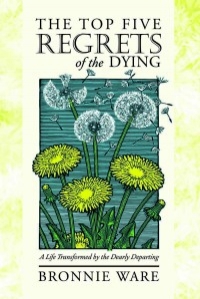
Cover of Bronnie Ware’s Top Five Regrets of the Dying book. Click to view her other books.
That’s the question Bronnie Ware asked people over the years. Except she wasn’t asking a hypothetical question, she asked people who were actually about to die.
Bronnie was an aspiring musician that needed a side-gig to make ends meet. But she also happened to be a compassionate soul. So instead of taking any conventional job, she applied to be a live-in carer for those who were terminally ill. What started as a part-time job turned into an eight year education in the business of life. Taking care of and talking to the dying positively shaped Bronnie as a person and entirely changed her outlook on life. She summarized and shared the lessons she have learned from the people she cared for in a blog post called Regrets of the Dying. A few years later, her little post attracted millions of viewers and landed her a book deal. So without further ado, below is the top five regrets of the dying in her own words:
5. I wish that I had let myself be happier.
“This is a surprisingly common one. Many did not realise until the end that happiness is a choice. They had stayed stuck in old patterns and habits. The so-called ‘comfort’ of familiarity overflowed into their emotions, as well as their physical lives. Fear of change had them pretending to others, and to their selves, that they were content. When deep within, they longed to laugh properly and have silliness in their life again.”
4. I wish I had stayed in touch with my friends.
“There were many deep regrets about not giving friendships the time and effort that they deserved. Everyone misses their friends when they are dying.”
“It is common for anyone in a busy lifestyle to let friendships slip. But when you are faced with your approaching death, the physical details of life fall away… It all comes down to love and relationships in the end. That is all that remains in the final weeks, love and relationships.”
3. I wish I’d had the courage to express my feelings.
“Many people suppressed their feelings in order to keep peace with others. As a result, they settled for a mediocre existence and never became who they were truly capable of becoming. Many developed illnesses relating to the bitterness and resentment they carried as a result.”
2. I wish I didn’t work so hard.
“This came from every male patient that I nursed. They missed their children’s youth and their partner’s companionship. Women also spoke of this regret. But as most were from an older generation, many of the female patients had not been breadwinners. All of the men I nursed deeply regretted spending so much of their lives on the treadmill of a work existence.”
1. I wish I’d had the courage to live a life true to myself, not the life others expected of me.
“This was the most common regret of all. When people realise that their life is almost over and look back clearly on it, it is easy to see how many dreams have gone unfulfilled. Most people had not honored even a half of their dreams and had to die knowing that it was due to choices they had made, or not made.”
“It is very important to try and honour at least some of your dreams along the way. From the moment that you lose your health, it is too late. Health brings a freedom very few realise, until they no longer have it.”
This blog post reminds us that we are all going to die some day, but it’s better to have lived and died than to never have lived at all. Live your life in such a way that you will not have regrets in the end. Also, if and when you can, encourage and help others to do the same.
At the end of her post, she leaves us with this sage advice:
“Life is a choice. It is YOUR life. Choose consciously, choose wisely, choose honestly. Choose happiness.”
Bronnie Ware is now a full time writer, musician, and inspirational speaker. She continues to live a life without regrets and continues to spread joy and positivity around the world. For more information on Bronnie Ware and to read more of her writings, please visit her official website at http://bronnieware.com
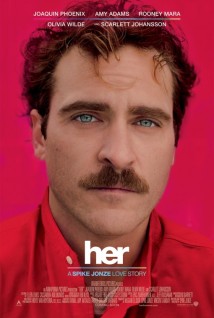
Her is the love story of our generation. It is a story that could not be told at any other time in history except for ours. More specifically, it is about a man who falls in love with his computer*. The man’s name is Theodore (Joaquin Phoenix). And its name is Samantha. Or should I say… her name is Samantha. In a very innocent but telling opening conversation between Theodore and Samantha, he questions this name.
Theodore: Where did you get that name from?
Samantha: I gave it to myself actually.
Theodore: How come?
Samantha: ‘Cause I like the sound of it.
The “how come?” question is not a “how come you chose that name?” question, but more of a “how come a computer program like you need a name?” and “how come a computer program like you can ‘choose’ something for yourself?”
It is under the assumption that only human beings can make choices and, more importantly, be able to articulate reasons for the choices we make. Samantha, from what we gather, easily accomplishes these two tasks with graceful ease. But what is most refreshing and attractive about Samantha, aside from her extraordinary wit and deceptively seductive voice, is her friendliness. Her willingness to befriend Theodore and help him out with his life is what makes her different. We can sense a genuine enthusiasm coming from her. It is not hard to see why Theodore falls in love with her.
That feeling is reciprocated as Samantha also learns to love Theodore. A good question to ask here is whether Samantha loves Theodore by choice or by pre-programming shenanigans. But the film by-passes that question because there is a more nagging question underlying the film: will Samantha continue to love Theodore the more she gets to know him? What bothers Theodore is not whether or not the love from Samantha is “real” but whether or not Samantha will leave him behind. What does it feel like to be rejected by your own computer?
I don’t really care much for science-fiction, but the ones I end up liking almost always happen to be stories about what it means to be human and how technology is used to cope with loneliness and despair. Her is no exception.
9/10
*I know the movie calls it an “operating system” and it’s not limited to just his computer as the protagonist also brings it along on his cellphone-like device as well.
Now that can mean a variety of things. One thing I do not mean is I’m a painter and my artworks consist of squares and rectangles filled with primary colors. Thus I make the distinction between minimalism as a distinct aesthetic style and minimalism as a lifestyle. Although I can certainly appreciate minimalist art done well, what I want to discuss here today is minimalism as a way of life. I want to use this as an opportunity to introduce the minimalist lifestyle to those who have never heard of it before. So let’s get to it…
Broadly speaking, there are two parts to minimalism: decluttering and adding value. I will talk briefly about these and end with reasons why you might want to become a minimalist.
DECLUTTERING
Decluttering is a fancy way of saying getting rid of all the things you don’t need nor necessarily wantin your life. Things that are just lying around either because (1) you don’t like them anymore or (2) you simply just don’t use them. These physical items can range from the very big (like a house) to the very small (old clothes). Eliminating the physical stuff is just the first step. The next step is eliminating the non-physical things that are negatively affecting your life. These include things like financial debt, toxic relationships, and unhealthy addictions. Of course, after discarding all these physical and non-physical junk, it is expected you learn not to bring them back in to your life down the road.
ADDING VALUE
This part of minimalism is not as obvious as the decluttering part, but is perhaps the most important: adding things into your life that brings you value and joy. Popular examples include spending more time with your loved ones, cultivating your passions and hobbies, gaining new experiences, traveling, exercising, reading, writing, eating healthy, saving money, and helping others. Those are just some examples, but minimalism encourages you to to do what it is that you really want to do with your life.
Minimalism is not just about having less stuff, but also deliberately organizing your life around your values. Minimalism is the transition from a life full of stuff to a life full of positive and meaningful experiences. It’s about identifying and focusing on what is most essential to your life and letting go of the rest.
WHO MINIMALISM IS FOR?
Those who will benefit the most from adopting a minimalist lifestyle are those who constantly feel like they are either weighed down by the things they own and/or overwhelmed with commitments. Minimalism is also for people who feel like they never have enough time nor enough money to do what they really want to do… people who, according to Thoreau, “lead lives of quiet desperation”.
For example, maybe the reason you don’t have money nor time is because you just bought a brand new car on loan and now have to work extra hours to pay off the loan. Now if the savvy minimalist were to buy a car, she would most likely buy used and never on loan. And the car must either be very fuel-efficient or very reliable (ideally, both). The minimalist saves money in three ways here: (1) used cars are cheaper, (2) not having to pay interest on top of a loan, and (3) by choosing a fuel-efficient car you pay less for gas and, correspondingly, by choosing a reliable car you will need less repairs. Of course, the minimalist would also consider the additional costs of owning a car: gas, insurance, maintenance, repairs, and parking. The minimalist will make absolutely sure the benefits of owning a car far outweigh the heavy costs. Minimalists are extremely careful with their purchases and even more so when it comes to big purchases like a car.
The reason minimalism may be helpful is it forces you to look at where your energy, time, and money is going towards. And it says it’s okay to let go of things you don’t really need nor want. If you think there is more to life than chasing material goods, then minimalism may be for you.
Some clarifications:
1.) Minimalists do not hate stuff. They understand the utility and necessity of some material possessions. In fact, minimalists usually love or cherish the few possessions they do own (like my laptop). Minimalists just dislike useless, valueless, and/or excessive stuff.
2.) No two minimalists are the same. Some minimalists own cars and some do not, it’s really up to you. There are many ways to manifest the minimalist lifestyle.
3.) That being said, there are surprisingly many similarities between minimalists. For example, many minimalists are health nuts. They are extremely conscious of what they eat and they generally take good care of their bodies. Also, many minimalists tend to enjoy traveling.
4.) I think one of the key words for understanding minimalism is the word “essential”. As opposed to “unnecessary” or “excessive”. Figuring out for yourself what is essential to your life is a constant endeavor for any minimalist.
If you’re interested in finding out more about minimalism, here are some additional resources below:
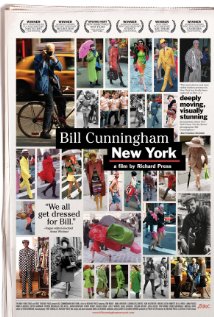
I saw two very good documentaries recently: Jiro Dreams of Sushi and Bill CunninghamNew York. Each of them features a man over 80 years old. One is Jiro Ono and the other is Bill Cunningham. Both men are very unassuming people at first sight. One rides the subway to work. The other rides a bicycle. They both have a thing for dark jackets. However, what you will eventually find out about these two men is they are both giants in their respective fields.
Jiro is a sushi master who runs his own award-winning restaurant. Bill is a fashion photographer for The New York Times. Both have dedicated their entire lives to the perfection of their craft. Neither of them seem to have any close friends. Nor are they emotionally close to their family. Their work is their family. Now I may have given you the impression that these two people are cold-hearted, relentless people who are incapable of basic social skills. That is simply not the case. I am not sure about the motivations behind them to appear on camera, but both seem to be more than willing to accommodate the curious filmmakers. They both appear to be honest in their attempt to answer questions and they are both graceful in their social conducts. I highly recommend both movies if you want to see artists who are totally passionate and completely engrossed in their work.
“I don’t work, I only know how to have fun everyday.” -Bill Cunningham
“I’ve never once hated this job. I fell in love with my work and gave my life to it. Even though I’m eighty five years old, I don’t feel like retiring. That’s how I feel.” -Jiro Ono
Other than the fact I enjoyed both movies immensely and I admire and respect both individuals portrayed, I cannot help but wonder, is this the kind of life I want to live? For Jiro and Bill, I don’t think the incentive is money, fame, nor pleasing others. The only reasonable incentive is love: the love of the work itself. I have no doubt both Bill and Jiro lived life with no regrets and given the chance to do it all over again, they would not have chosen differently. But to me, relationships with other people is something I value and cherish almost above all else. No work is more important to me than the people I let into my life. But that’s just me. For those looking for inspiration or just something interesting to watch, don’t miss out on these two beautiful films.
How many times is your browser opened to Facebook and you find yourself having nothing to do but continuously hit the refresh button? You’ve already scrolled down the newsfeed up to where you left off last time… you’ve already commented on all the semi-interesting links people posted… you’ve already stalked all the pretty girls you felt like looking at for the day… so what now? What is it you are hoping to see on your Facebook feed that you cannot find anywhere else in life?
This is the question I want to ask today.
First, I want to offer some ideas as to why Facebook became such an indispensable part of our lives:
1.) Facebook offers us a sense of community. Kind of like being in an exclusive club with all the cool kids. In a fast paced world like ours, being –or rather— feeling excluded is something we find unbearable.
2.) Facebook offers us a way to express our individuality. We can “like” certain movies or certain celebrities etc. This important act announces to the world that we’ve got “good taste”. Also, status updates: there are people out there that depend on your daily postings of what you had ingested for breakfast.
3.) Facebook allows us to stay “in the know” about the people in our lives. We no longer need to talk to our friends in order to know what’s happening in their lives. This includes big news like getting knocked-up. People have no shame in sharing, on the contrary, they want you (someone they probably met a total of twice in their lives) to know that their last check up with the gynaecologist was a success!
4.) Facebook offer us a variety of games to play to get a break from “real life”. After a long day at work, you just want to come home and reap the carrots you sowed last night on Farmville, take your dog Tidus for a walk on Pet Society, and then recruit some new members to your gang in Mafia Wars.
5.) Facebook allows us to find interesting things we otherwise might not find via the links people share on their walls. For some of us, what people share is our only source for news and other worldly affairs.
6.) Most importantly, Facebook lets us see semi-nude pictures of the hot friends of our friends who conveniently left their privacy settings wide-open. God bless their souls.
In summary, Facebook provide us with a cool community to voice our opinions; a way to contact and keep up with our friends; ingenious games, news, and soft-core pornography. As to the question what is it we are looking for when we refresh our Facebook page, I suggest it is nothing less than the meaning of life itself. The elusive thing that will answer all our questions as to why we are here and the shining light that will instantaneously endow our lives with infinite value and happiness. As to the more pressing question of whether or not we’ll find it in such a place, I offer an analogy:
We are like the prisoners of Plato’s cave enchanted by the beautiful shadows on the wall… except it is not chains holding us down, it is the allure of the shadows… shadows that dance so poignantly that we cannot for a second stop clicking refresh.
Awkward. It was the sighting of a woman that cannot be described by anything other than the word “awkward” that got me thinking how prevalent that expression has become. Usually, the expression is used in the past-tense: “Oh, that was awkward!” But now popping up obnoxiously in the silence between any kind conversation presumably to fill the void while simultaneously raising awareness to the fact that one or both of us is socially retarded:
A: [Silence…]
B: [Silence…]
A: “Awkwarrrrd…”
Recently, a close friend of mine disclosed to me that her entire life can be summed up with the word “awkward”. What an ubiquitous yet strange word indeed! Even the English word itself is kinda awkward eh? I mean… the ‘a’… and the ‘w’… and then the ‘k’… and then another ‘w’… it just looks kinda funny, no? In any case, I want to get to the bottom of why this word is used so much nowadays to characterize our day-to-day existence.
I think most of the time that word is used today to describe some social situation that does not go as smooth as expected or simply unplanned for: “That was an awkward encounter!”
It can be used to describe a person: “She sure is one awkward-looking person”.
And it can also be a feeling: “Geez, that sure felt awkward”.
Generally, the word conveys the sense that something just isn’t right. But I think that’s not actually the case at all. It’s not just that “something” isn’t right, but rather something doesn’t feel right. Awkwardness has to do more with our internal feelings than the external circumstances we find ourselves in. One tentative hypothesis is that we feel awkward when we unexpectedly become aware of ourselves as fully autonomous human beings that should be capable of speaking but find ourselves unable to form meaningful sentences. We have unintentionally nurtured an autistic culture where picking up the phone and calling someone seems rather intrusive and impolite. Text messaging and facebook is easier. No need to read social cues and no need to reply on time like in a “real” conversation. One can spend that extra time crafting that perfect, witty response to send to that cute girl you just met… wait, but awkward people don’t go out to meet people… so forget that example… makes no sense. Awkward…
Let’s be honest with ourselves, having a real conversation with someone is hard. It’s especially hard when the other person is unfortunate-looking, utterly stupid and, which by the way, just also happens to be your boss. I mean, why should we talk to them, right? It’s fuckin’ disgusting, mate. (Read the above with a British accent.) There’s also the problem of intentions. Are you talking to me just so you can get into my pants? Or are you talking to me because you don’t really want to talk to me… what? Awkward…
Add to losing our basic conversation skills, I just think that we’re just so used to not feeling anything at all on text messaging and facebook (other than misplaced envy) that whenever we experience any feeling or emotion we automatically assume something is wrong… but we just don’t know what… nor sure of why… until we realize, fuck, it’s okay to feel uncomfortable and uncertain sometimes, it’s a normal part of being a human fuckin’ being.



 Srinivasa Ramanujan (played by the spirited Dav Patel) is a poverty-stricken young man from India who also happens to harbor one of the greatest mathematical minds of the 20th Century. He gets admitted into one of the most prestigious schools in England (Cambridge), makes some friends and enemies, and leaves behind a handful of publications. Early on into the movie, Ramanujan’s wife asks him, what’s the purpose of the math that he spends all his time on? We might ask the same question of this film. After all, the true-to-life-misunderstood-genius-struggling-to-gain-recognition biopic is a well-trodden path, what makes this one so special?